A recent paper circulated as part of the Federal Reserve’s Finance and Economics Discussion Series (FEDS) is intended to stimulate discussion on the ways individuals without a bank account – “the unbanked” – are classified.
The authors propose a means of classification which accounts for individuals’ interest in being banked, similar to the way unemployment statistics distinguish between those who are actively seeking employment and those who are not. Specifically, the new classification draws a distinction between individuals that do not have a bank account but would liketo have one (the “unbanked”) and individuals that do not have a bank account and are not interested in having one (the “out of banking population”). The paper proposes that policymakers consider these factors when designing policies aimed at increasing financial inclusion.
The paper uses FDIC data to show that these two groups differ in policy-relevant ways. While the unbanked mostly cite past financial, credit, orbanking problems as reasons for not having a bank account, the out of banking population cites a growing mistrust toward the traditional banking system. The authors propose that by splitting the “no-account” group into these two — interested vs uninterested — policymakers can better tailor interventions.
Evolution
Using data from the Federal Deposit Insurance Corporation (FDIC) National Survey of Unbanked and Underbanked Households, the authors trace how these measures evolved from roughly 2009–2021. They found that:
- The Banking Population Participation Rate rose from about 94.6% in 2009 to 96.8 % in 2021 — meaning a growing share of the population either had a bank account or wanted one.
- In 2021 they estimate about 1.3% of the banking-population was “unbanked” by the new definition (i.e., want an account, but don’t have one). Meanwhile 3.2% of the banking-age population were in the “out of banking” category (don’t want an account).
Direct Express and the Unbanked
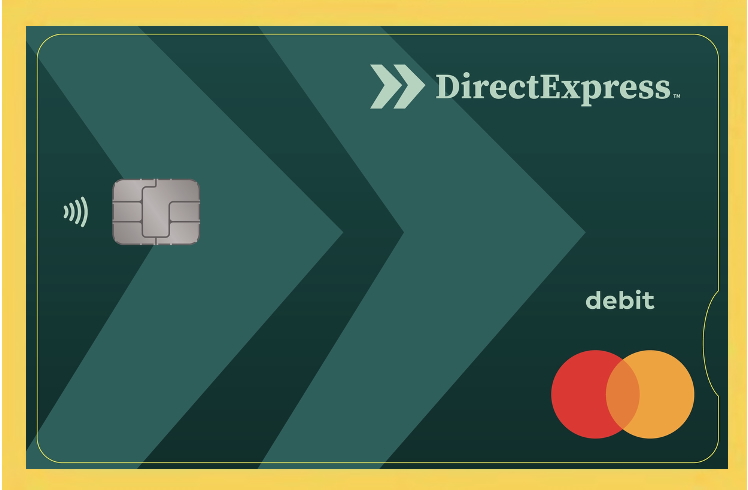
These trends and distinctions could have implications for the future as it relates to Direct Express®. According to our latest cardholder survey, almost seven in ten Direct Express® cardholders were unbanked in 2024. The number of banked cardholders has increased since 2019, though the proportion recorded as unbanked increased by one percent since 2023. Though Direct Express® does not collect data on why cardholders are unbanked, anecdotal evidence from cardholders (including cardholders like Elizabeth) points toward unbanked Direct Express® cardholders generally belonging to that category of the population who had or want a bank account, but, for one reason or another, cannot secure one. Though we do not know for sure, it may also be likely that a small number choose Direct Express® as an alternative to a bank account for reasons similar to those cited by the report’s “out-of-banking” category. Given that this category of unbanked is growing, Direct Express® may well see more cardholders to come from that category as we move forward.
As the report authors argue, using “a finer lens that distinguishes those who want an account from those who don’t…. reveals that while access issues remain real for some, for others the obstacle is deeper — rooted in distrust and choice”. We hope that the reliability and ease of access represented by Direct Express® can be a tool for building that trust, at the same time as it fulfills its primary role as a means of receiving and making safe, reliable electronic payments.
The full paper, is available at the link below:
SOURCE: Board of Governors of the Federal Reserve System