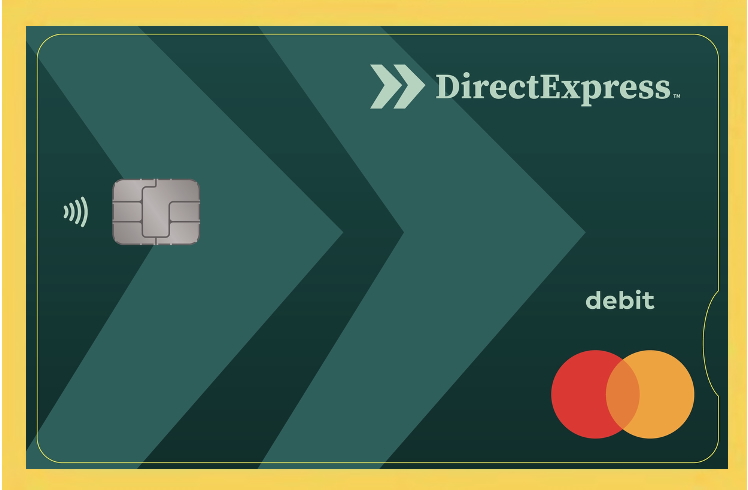
FDIC research completed in 2024 takes a close look at an important but often oversimplified group: unbanked households. Rather than treating the unbanked as one group, the report distinguishes between households that are entirely cash-only and those that, while still unbanked, regularly use prepaid cards and nonbank payment apps. That distinction is vital—and relevant to understanding the behaviors and preferences of Direct Express® cardholders.
Key FDIC Finding: Not All Unbanked Households Behave Alike
The FDIC’s analysis shows that while most unbanked households rely only on cash, a substantial minority use prepaid cards or digital payment apps as functional substitutes for bank accounts. These two groups differ markedly in attitudes, behaviors, and engagement with the financial system.
Cash-only households tend to be older, less connected to digital financial tools, and more skeptical of banks. They are less likely to have had a bank account or to express interest in opening one, relying instead on in-person transactions, money orders, and check-cashing services.
By contrast, unbanked households that use prepaid cards or digital payment apps are more integrated with the electronic payments ecosystem. They commonly use these products to receive income, pay bills, and make retail or online purchases. Although still outside the banking system, their behavior suggests a willingness to engage with structured financial tools that are accessible, predictable, and perceived as safe.
Direct Express Cardholders
Viewed through this FDIC framework, Direct Express® cardholders align closely with the “unbanked but electronically engaged” segment, rather than the cash-only group. Having access to a prepaid card mitigates the difficulties in participating in the formal economy as the U.S. financial system moves toward a more digital infrastructure.
Cardholder Survey data show that most Direct Express® users are unbanked, yet their financial behavior is not cash exclusive. Cardholders routinely use the card for retail purchases, bill payment, ATM withdrawals, and balance monitoring, often through the DX℠ Mobile App, for which 1.9 million cardholders have registered. Direct Express® also has functionality which allows cardholders to use their Direct Express® card in a digital wallet and increasing numbers do so. This is consistent with the FDIC’s finding that prepaid-using households participate in the digital payments economy.
Many Direct Express® users, however, still withdraw a significant share of their funds as cash, particularly for rent or other cash-based obligations. This hybrid pattern—electronic receipt combined with continued cash use—closely matches the FDIC’s observations about prepaid users.
Trust, Control, and Predictability
Trust is a central theme in the FDIC’s analysis. Cash-only households often cite distrust of banks, while prepaid users appear more willing to trust limited-purpose products that stress transparency, simplicity, and control.
This helps explain continued reliance on Direct Express®. For many users, predictable benefit receipt, immediate access to funds, and the avoidance of overdraft risk outweigh other concerns. As with the FDIC’s prepaid-using households, it seems Direct Express® cardholders value certainty over flexibility.
Implications for Financial Inclusion Policy
The FDIC’s research reinforces that financial inclusion is not binary. For many benefit recipients, prepaid cards meet essential needs while showing real constraints, such as discomfort with traditional banks.
Understanding Direct Express® users as part of the FDIC’s “unbanked but digitally engaged” segment clarifies both the program’s value and its limits. Prepaid cards are not merely transitional tools; for millions of households, they act as a durable financial operating system that should be evaluated on its own terms.
The full FDIC report can be found here: A Closer Look at the Unbanked: Cash-Only Households Versus Those That Use Prepaid Cards or Nonbank Payment Apps
Source: FDIC